Energy moves, stars and planets move, earth moves, and we, too, must move. Each day our own energy shifts and different dimensions open to us.
Chi is energy. It is the vital force of life in the Universe. Chi travels from the stars, planets and nature through the subtle bodies and animates the physical plane. Chi is love…
When we work with Chi and feel its energy running through our physical and subtle bodies, we know from experience the substance of the Universe. We realize that this spirit flows through us physically and permanently. As we develop our own energy, we form a link to the greater parts of ourselves.
Stand near the sea…
or a tree…
or a mountain…
Breathe in the rays of the sun…
or feel the ebb and flow of the moon …
Bit by bit you become movement itself. You become energy, no longer separated from the universe around you.
Time becomes space and space becomes time. There is no past, present or future; you are not concerned with what will happen next.
You become pure joy…a vibrating part of a delicate network which weaaves together nature and the cosmos. You are one with the whole.
Thursday, April 20, 2006


Tuesday, April 18, 2006
Spinning
All things in this Universe are in a constant state of spinning, from subatomic particles to solar systems and galaxies. Every particle in our body and all that is around us are already spinning. The Milky Way galaxy that our solar system is a part of, is spinning in a spiral fashion as you read this.
The Source of this Universe manifests its energy through the spiral, as we harmonize with this energy; we tap into the core of our Universe.
The physical processes at the core of our Universe and galaxies … are extremely energetic and are capable of propelling matter very close to the absolute speedof light, 186,282 miles per second.
Saturday, March 18, 2006
Intentions Determine Right or Wrong
Here is a simple proof of why what determines "right and wrong"
(wholesome and unwholesome/ skillful and unskillful/ good and bad)
is logically, spiritually and lawfully based on our intentions instead
of our actions.
If person Tom and Dick help Harry to be free of suffering,
obviously, both their actions in themselves are "right".
But if one can read their minds to see their intentions,
and discover Tom to be be truly helpful only to benefit Harry,
while Dick is helpful only to benefit himself indirectly,
then surely, ultimately, on the most fundamental level,
despite their similarly helpful actions,
Tom is the one that is truly right, while Dick is actually wrong -
even if Dick's action is totally "right" in the eyes of Harry!
This tells us 2 important lessons -
1. It is crucial to be mindful of our intentions, to have right ones -
because karma is fundamentally created by our intentions.
An action is ultimately morally right only when the intention is
right.
2. It is crucial not to judge someone only by his/her actions -
because things are often not what they seem.
An outwardly "wrong" action might be actually right,
while an outwardly "right" action might be wrong.
written by "Shen Shi'an"
Wednesday, March 01, 2006
Counter-balance the negativity
Counter-balance the negativity with your positive intentions. Think of a scale and remember to put enough positive intentions on the opposite side that your positivity outweighs the previous negativity.
It's not always enough to 'pivot' away from what we don't want. We must focus on the essence of our desires enough to counter-balance and neutralize the effects of our previous 'negativity'.
You have to work on releasing irritation or self-sabotaging negative emotions.
Your vibration is always where you last left it
Saturday, February 25, 2006
Intent
In the Universe, there is an immeasurable, indescribable force which is called Intent, and absolutely everything that exists in the entire cosmos is attached to Intent by a connecting link.
Wednesday, February 22, 2006
Interconnectivity
We seem to be immersed in a sort of universal ocean of Interconnectivity. Just as all creatures in a sea are connected by the cohesive body of water, so the entire world and universe is interconnected in a kind of cohesive psychic sea. There is nothing to which you are not attached in some way.
Evidently, even our thoughts are not just isolated ideas waiting to be acted upon, but are actually linked in some fashion to the object(s) of the thought. Our intentions stretch out into the world around us, and also extend into the future. We are linked to our environment and to each other. If we are linked to the future, then our thoughts effect what is coming. This means that our mental intentions are stretching our thoughts outward, actually link to objects and draw them toward us.
Evidently, even our thoughts are not just isolated ideas waiting to be acted upon, but are actually linked in some fashion to the object(s) of the thought. Our intentions stretch out into the world around us, and also extend into the future. We are linked to our environment and to each other. If we are linked to the future, then our thoughts effect what is coming. This means that our mental intentions are stretching our thoughts outward, actually link to objects and draw them toward us.
Tuesday, February 21, 2006
Ponder
Our life is shaped by our mind.
We become what we think.
Suffering follows an evil thought as the wheels of a cart follow the oxen that draw it.
Our life is shaped by our mind.
We become what we think.
Joy follows a pure thought like a shadow that never leaves."
(The Dhammapada)
We become what we think.
Suffering follows an evil thought as the wheels of a cart follow the oxen that draw it.
Our life is shaped by our mind.
We become what we think.
Joy follows a pure thought like a shadow that never leaves."
(The Dhammapada)
Monday, February 20, 2006
Bypassing trouble
Trouble creates a capacity to handle it. I don't embrace trouble; that's as bad as treating it as an enemy. But I do say meet it as a friend, for you'll see a lot of it and had better be on speaking terms with it.
Friday, February 17, 2006
Peace and Harmony
If we choose to live in peace and harmony, the decline of the world can be avoided and the prosperity of humanity can be extended without bounds. If, on the other hand, we are to negate the importance of our fellow man, the consequences of same shall result in an eventual end.
Friday, February 10, 2006
Happiness
No one withholds any happiness from us - not even our most loved ones. Our happiness is our charge. While we often place our happiness in the charge of others, it is us who voluntarily do that - and we can take this responsibility back to own it. Be good to yourself because nobody else has the power to make you truly happy - or sad. Only when we mindfully see and take up this personal responsibility, can we truly love - both ourselves and others.
Monday, January 09, 2006

Sunday, January 08, 2006
Zen of Learning
It does not matter if you have not yet started to learn something.
When you have started, however, you must not stop until you really know it!
It does not matter if you have not yet asked questions, but when you begin, you must not stop until the questions have been answered.
It does not matter if you have not yet started to think carefully, but when you do, stop only when you have reached a conclusion.
It does not matter if you have not yet started to discern something, but when you have, you must not stop until you are clear.
It does not matter if you have not yet started to practice something, but when you do, you must diligently put it into practice.
Saturday, January 07, 2006
Energy raising Tai-chi exercise

This Energy raising Tai-chi exercise is extremely relaxing. If you suffer from stress you can use this anytime in your day. Also many astral projectors believe in chi (life force energy) and this exercise gathers the energy from the space around you.
With your legs slightly bent raise your arms in a circular motion slowly from 1 to 4, breathe in while you do and feel your body become lighter. From 4 to 6 breathe out slowly push the energy you have gathered in steps 1 to 4 down your body into your tandan (belly where you can store the energy safely), feel yourself sinking as you do this. Repeat all steps for at least a minute.
Friday, January 06, 2006
Boost Your Energy Tip #5
Consider a Stress-Formula Multivitamin
People who are under chronic stress require more B vitamins. A stress formula multivitamin often has more B vitamins than standard multis. B-50 B supplements are also available as a supplement to a standard multivitamin. The B-2 in a B complex can turn urine a bright yellow color.
The B-complex vitamins are actually a group of eight vitamins, which include thiamine (B1), riboflavin (B2), niacin (B3), pyridoxine (B6), folic acid (B9), cyanocobalamin (B12), pantothenic acid and biotin. These vitamins are essential for:
* The breakdown of carbohydrates into glucose (this provides energy for the body)
* The breakdown of fats and proteins (which aids the normal functioning of the nervous system)
* Muscle tone in the stomach and intestinal tract
* Skin
* Hair
* Eyes
* Mouth
* Liver
Some doctors and nutritionists suggest taking the B-complex vitamins as a group for overall good health. However, most agree that the best way to get our B vitamins is naturally, through the foods we eat!
Thursday, January 05, 2006
Boost Your Energy - Tip #4
Take 20 Minutes Every Day Just For You. Create a daily ritual where you take 20 to 30 minutes for yourself just relaxing and doing nothing (no watching tv or surfing the net). Pick up a book, listen to music, meditate, have a cup of tea, or try a new yoga pose.
People who meditate have long known that this practice has positive health benefits that include improved energy and calmness of mind.
Research shows that meditation also increases levels of melatonin, an important hormone that supports the immune system, promotes deep and restful sleep, slows cell damage and aging, improves energy and may even inhibit the growth of cancer cells.
* Two Ways to Meditate: Step-by-Step Instructions
Here are two meditation techniques that are based on those used in research studies. For maximal benefit, try to meditate for twenty minutes to half an hour before you go to sleep using the technique that feels more comfortable for you.
Mindful Meditation
1. Find a quiet and comfortable place. Sit in a chair or on the floor with your head, neck and back straight but not stiff. Try to put aside all thoughts of the past and the future and stay in the present.
2. Become aware of your breathing, focusing on the sensation of air moving in and out of your body as you breathe. Feel your belly rise and fall, the air enter your nostrils and leave your mouth. Pay attention to the way each breath changes and is different.
3. Watch every thought come and go, whether it be a worry, fear, anxiety or hope. When thoughts come up in your mind, don't ignore or suppress them but simply note them, remain calm and use your breathing as an anchor.
4. If you find yourself getting carried away in your thoughts, observe where your mind went off to, without judging, and simply return to your breathing. Remember not to be hard on yourself if this happens.
5. As the time comes to a close, sit for a minute or two, becoming aware of where you are. Get up gradually.
Relaxation Response
1. Find a quiet place and sit in a comfortable position. Try to relax your muscles.
2. Choose a word or phrase that has special meaning to you and makes you feel peaceful. Or you can try the words "Ham Sah," a Sanskrit mantra meaning "I am that."
3. As you breathe in, slowly produce the sound "hammm" as if you are sinking into a hot bath. As you exhale, slowly produce the sound "saah," which should feel like a sigh.
4. Breathe slowly and naturally. Inhale through your nose and pause for a few seconds. Exhale through your mouth, again pausing for a few seconds.
5. Don't worry about how well you are doing and don't feel bad if thoughts or feelings intrude. Simply say to yourself "Oh well" and return to your repetition.
6. As the time comes to a close, continue to be aware of your breathing but sit quietly. Becoming aware of where you are, slowly open your eyes and get up gradually.
Wednesday, January 04, 2006
Boost Your Energy Tip #3
Eliminate Energy-Sappers From Your Diet
* Not enough alkaline-forming foods in your diet - Foods that are alkaline-forming include figs, molasses, green leafy vegetables, almonds, beets, dates, celery, canteloupe, and parsley.
In addition to eating these foods, taking 1 teaspoon of a greens powder every morning mixed into juice or a smoothie can also raise energy.
* Excess sugar - Excess sugar causes fluctuations in blood sugar, which can result in plummeting energy levels. Try to decrease all forms of refined sugar. Watch out for low-fat foods, many have forms of sugar, such as high-fructose corn syrup, added to make the food more palatable.
* Insufficent protein - With high-protein, low-carb diets being so popular, it's hard to believe it but insufficient protein is a common reason for fatigue. Pack some almonds and nuts for a quick and convenient protein snack.
* Too much coffee - Although coffee initially raises stress hormones and gives a rush of energy, consuming several cups or more of coffee per day can promote burnout. Try to gradually cut back to one cup a day.
* Not enough water - One of the most common reasons for low energy is not drinking enough water.
Tuesday, January 03, 2006
Boost Your Energy - Tip #2:
Get a Good Night Sleep
8 hours of sleep per night is optimal. But what many people don't know is that the actual time you fall asleep is important too, sleeping from 1 am to 9 am is not as restorative as sleeping from 10 pm to 6 am.
The reason why is because hormone secretion, body temperature, digestion, and other important restorative processes follow a 24-hour cycle linked to natural light exposure. The later in the evening we fall asleep and the later in the morning we wake up, the more out-of-sync our cycle becomes. If you've ever gone to bed at 3 am and woken up the next morning at 11 am, you may have noticed that you feel worn down and not fully "with it".
Growth hormone is one such restorative hormone. Eighty percent of growth hormone, which is needed for lean muscle, optimum immune function, and strong skin, is secreted during sleep between the hours of 11 pm and 1 am.
Try to go to bed before 10 pm. It may be difficult to get used to getting to bed at an early time, especially if you work late or if night-time is your only downtime and you like to watch late-night television. But you'll be rewarded with increased energy.
Monday, January 02, 2006
Boost Your Energy - Tip #1
Energy is essential in this sleep-deprived, overstretched, high-speed world. How do we recharge our batteries when there is a constant drain on our resources?
Belly Breathing
In Chinese Medicine, energy is called "qi" (pronounced "chi"), and one of the most important ways we make qi is by breathing deeply. Stress, poor posture, a snug waistline, and habit are some of the reasons why our breath doesn't make it down to the bottom of our lungs. Belly breathing, also known as diaphragmatic breathing, is a simple way we can increase our qi energy and improve our stamina.
Step 1: Calm Your Mind
The goal is to use this technique to breathe all of the time. But while you are practicing, you can sit in a chair or even stand, you don't have to sit cross-legged.
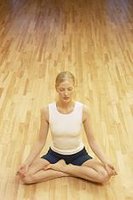
Instruction: Try to calm your mind. Forget about what you’re going to make for dinner tonight, the emails you still have to respond to, and the birthday gift you still have to get for your mother-in-law. But don’t force it, just let go of any thought that pops in your mind.
Step 2: Maintain Good Posture
Instruction: Proper posture gets the air into your lungs and helps energy flow through your body. Sit up straight, imagining a string lifting up your chest. You should feel the area between your chest and your navel lengthen.
When you try to improve your posture, you may find your muscles tensing up, especially around the abdomen. Consciously try to release any tension from your body.
Step 3: Breathe In Through Your Nose
Instruction: Breathe in through your nose evenly.
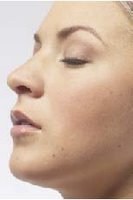
Be sure to push out your stomach rather than your chest. If it helps, rest the palm of one hand against your abdomen and then breathe in to expand your belly. You will feel your hand being pushed outward.
Count silently and slowly to three. This way, you are using your diaphragm and getting a deeper breath.
Instruction: Breathe out through your mouth. Count silently and slowly to six, remembering to pace yourself so you still have some breath left.
Step 4: Breathe Out Through Your Mouth

Step 5: Repeat Twice
Instruction: Repeat the cycle two more times. If you feel light-headed, slow down a bit (if you are standing, sit down and do it).
Belly Breathing
In Chinese Medicine, energy is called "qi" (pronounced "chi"), and one of the most important ways we make qi is by breathing deeply. Stress, poor posture, a snug waistline, and habit are some of the reasons why our breath doesn't make it down to the bottom of our lungs. Belly breathing, also known as diaphragmatic breathing, is a simple way we can increase our qi energy and improve our stamina.
Step 1: Calm Your Mind
The goal is to use this technique to breathe all of the time. But while you are practicing, you can sit in a chair or even stand, you don't have to sit cross-legged.

Instruction: Try to calm your mind. Forget about what you’re going to make for dinner tonight, the emails you still have to respond to, and the birthday gift you still have to get for your mother-in-law. But don’t force it, just let go of any thought that pops in your mind.
Step 2: Maintain Good Posture
Instruction: Proper posture gets the air into your lungs and helps energy flow through your body. Sit up straight, imagining a string lifting up your chest. You should feel the area between your chest and your navel lengthen.
When you try to improve your posture, you may find your muscles tensing up, especially around the abdomen. Consciously try to release any tension from your body.
Step 3: Breathe In Through Your Nose
Instruction: Breathe in through your nose evenly.

Be sure to push out your stomach rather than your chest. If it helps, rest the palm of one hand against your abdomen and then breathe in to expand your belly. You will feel your hand being pushed outward.
Count silently and slowly to three. This way, you are using your diaphragm and getting a deeper breath.
Instruction: Breathe out through your mouth. Count silently and slowly to six, remembering to pace yourself so you still have some breath left.
Step 4: Breathe Out Through Your Mouth

Step 5: Repeat Twice
Instruction: Repeat the cycle two more times. If you feel light-headed, slow down a bit (if you are standing, sit down and do it).
Sunday, January 01, 2006
Emotions are related symptoms
In traditional Asian medicine, emotions and physical health are intimately connected. Sadness, nervous tension and anger, worry, fear, and overwork are each associated with a particular organ in the body. For example, irritability and inappropriate anger can affect the liver and result in menstrual pain, headache, redness of the face and eyes, dizziness and dry mouth.
The traditional Asian diagnosis is highly individualized. Once an organ system is identified, the unique symptoms of the patient determine the practitioner's treatment approach.
Using the liver again as an example, breast distension, menstrual pain, and irritability during menses are treated with certain herbs and acupuncture points, and migraines headaches, dizziness, and inappropriate anger with redness of the face point to a different type of liver pattern and is treated in a different way.
What does the liver have to do with migraine headaches? Organ systems in the traditional Asian sense may include the Western medical-physiological function, but are also part of a holistic body system. The liver, for example, ensures that energy and blood flow smoothly throughout the body. It also regulates bile secretion, stores blood, and is connected with the tendons, nails, and eyes.
By understanding these connections, we can see how an eye disorder such as conjunctivitis might be due to an imbalance in the liver, or excess menstrual flow may be due to dysfunction in the liver's blood-storing ability. Besides emotions, other factors such as dietary, environmental, lifestyle, and hereditary factors also contribute to the development of imbalances.
SPLEEN
* Emotions - worry, dwelling or focusing too much on a particular topic, excessive mental work
* Spleen Function - Food digestion and nutrient absorption. Helps in the formation of blood and energy. Keeps blood in the blood vessels. Connected with muscles, mouth, and lips. Involved in thinking, studying, and memory.
* Symptoms of Spleen Imbalance - Tired, loss of appetite, mucus discharge, poor digestion, abdominal distension, loose stools or diarrhea. Weak muscles, pale lips. Bruising, excess menstrual blood flow, and other bleeding disorders.
LUNG
* Emotions - grief, sadness, detached.
* Lung Function - Respiration. Forms energy from air, and helps to distribute it throughout the body. Works with the kidney to regulate water metabolism. Important in the immune system and resistance to viruses and bacteria. Regulates sweat glands and body hair, and provides moisture to the skin.
* Symptoms of Lung Imbalance - Shortness of breath and shallow breathing, sweating, fatigue, cough, frequent cold and flu, allergies, asthma, and other lung conditions. Dry skin. Depression and crying.
LIVER
* Emotions - anger, resentment, frustration, irritability, bitterness, "flying off the handle".
* Liver Function - Involved in the smooth flow of energy and blood throughout the body. Regulates bile secretion, stores blood, and is connected with the tendons, nails, and eyes.
* Symptoms of Liver Imbalance - breast distension, menstrual pain, headache, irritability, inappropriate anger, dizziness, dry, red eyes and other eye conditions, tendonitis.
HEART
* Emotions - lack of enthusiasm and vitality, mental restlessness, depression, insomnia, despair.
* Heart Function - Regulates the heart and blood vessels. Responsible for even and regular pulse. Influences vitality and spirit. Connected with the tongue, complexion, and arteries.
* Symptoms of Heart Imbalance - Insomnia, heart palpitations and irregular heart beat, excessive dreaming, poor long-term memory, psychological disorders.
KIDNEY
* Emotions - fearful, weak willpower, insecure, aloof, isolated.
* Kidney Function - Key organ for sustaining life. Responsible for reproduction, growth and development, and maturation. Involved with lungs in water metabolism and respiration. Connected with bones, teeth, ears, and head hair.
* Symptoms of Kidney Imbalance: Frequent urination, urinary incontinence, night sweats, dry mouth, poor short-term memory, low back pain, ringing in the ears, hearing loss, and other ear conditions. Premature grey hair, hair loss, and osteoporosis.
Saturday, December 31, 2005
Causes of Illness
Traditional Chinese Medicine (TCM) believes that the vitality of spirit is influenced by 7 emotions - joy, anger, pensiveness, worry, sorrow, shock, and fear. Since emotions are closely related to the energetics and functions of the organs, any prolonged excessive emotional state can cause disease in the organ systems. It is stated in the Yellow Emperor's Internal Classic that "excessive anger damages the liver, excessive joy damages the heart, excessive pensiveness damages the spleen, excessive sorrow damages the lungs, and excessive fear damages the kidneys." Also, "excessive anger causes qi to rise, excessive joy causes qi to retard, excessive sorrow causes qi to diminish, excessive fear causes qi to fall, excessive shack causes qi to scatter, and excessive pensiveness causes qi to stagnate." In TCM, the emphasis is placed more on the various physiological functions of an organ, rather than on its anatomical structure, because one of the main causes of disease is that of emotional trauma, which results in a malfunctioning of the internal organs.
Emotional trauma is considered an internal cause of disease. It falls under on of the three categories of the causes of disease: the exogenous (external), the endogenous (internal), and those that are neither exogenous nor endogenous. The exogenous causes of disease refer mainly to excessive atmospheric influences; namely the wind, cold, summer heat, dampness, dryness, and fire. That is, if our body can't effectively adapt to the changing seasons, our body's energy flow will be unbalanced and illness can result. The endogenous causes of disease refer mainly to excessive emotional trauma; namely the excesses of joy, anger, pensiveness, worry, sorrow, fear, and shock. The third cause of disease refers to diseases that are form neither external nor internal influences, such as overworking, excessive drinking, overeating, and unregulated sexual activities. Excesses of any of the pathogens can influence the circulation of qi and blood to the internal organs and can cause disease.
Emotional trauma is considered an internal cause of disease. It falls under on of the three categories of the causes of disease: the exogenous (external), the endogenous (internal), and those that are neither exogenous nor endogenous. The exogenous causes of disease refer mainly to excessive atmospheric influences; namely the wind, cold, summer heat, dampness, dryness, and fire. That is, if our body can't effectively adapt to the changing seasons, our body's energy flow will be unbalanced and illness can result. The endogenous causes of disease refer mainly to excessive emotional trauma; namely the excesses of joy, anger, pensiveness, worry, sorrow, fear, and shock. The third cause of disease refers to diseases that are form neither external nor internal influences, such as overworking, excessive drinking, overeating, and unregulated sexual activities. Excesses of any of the pathogens can influence the circulation of qi and blood to the internal organs and can cause disease.
Subscribe to:
Posts (Atom)
